


RATED "EXCELLENT" 7,950+ 5-STAR REVIEWS
Laurel Astaxanthin Gummies
Laurel Astaxanthin Gummies
🔹Glowing, fresh-looking skin without a 10-step routine
🔹UV defence from within - skin that handles sun better
🔹Clear-headed through the 3 pm slump
🔹Eyes that still feel fresh after 8 hours on screens
🔹A gummy, not a horse pill
Clinician's perspective
“Astaxanthin is the ingredient I recommend most for a healthy-looking glow. It builds up over time, so consistency is key. After a few weeks, my clients’ skin looks calmer, brighter and more hydrated, with less tired eyes and steadier energy as a bonus. My tip: choose 12 mg of lab-tested, natural microalgae astaxanthin, and give it 6-8 weeks.”

Couldn't load pickup availability
❗Due to high demand, our stock is selling fast! Take advantage of today's special offer while supplies last. To ensure authenticity, always order directly from our official website.
Key ingredients
Key ingredients
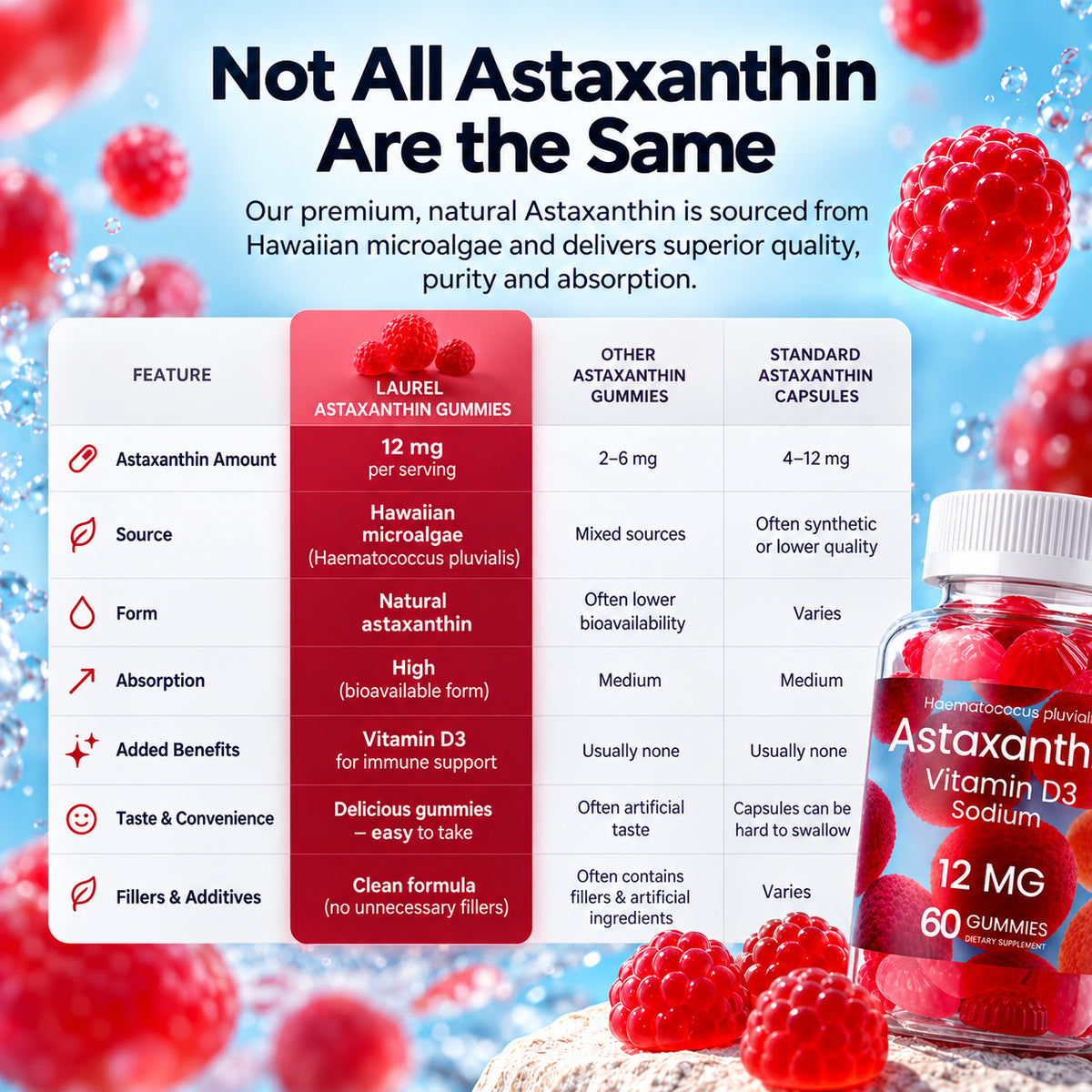
Hawaii's Finest Astaxanthin — Clean, Pure & Potent
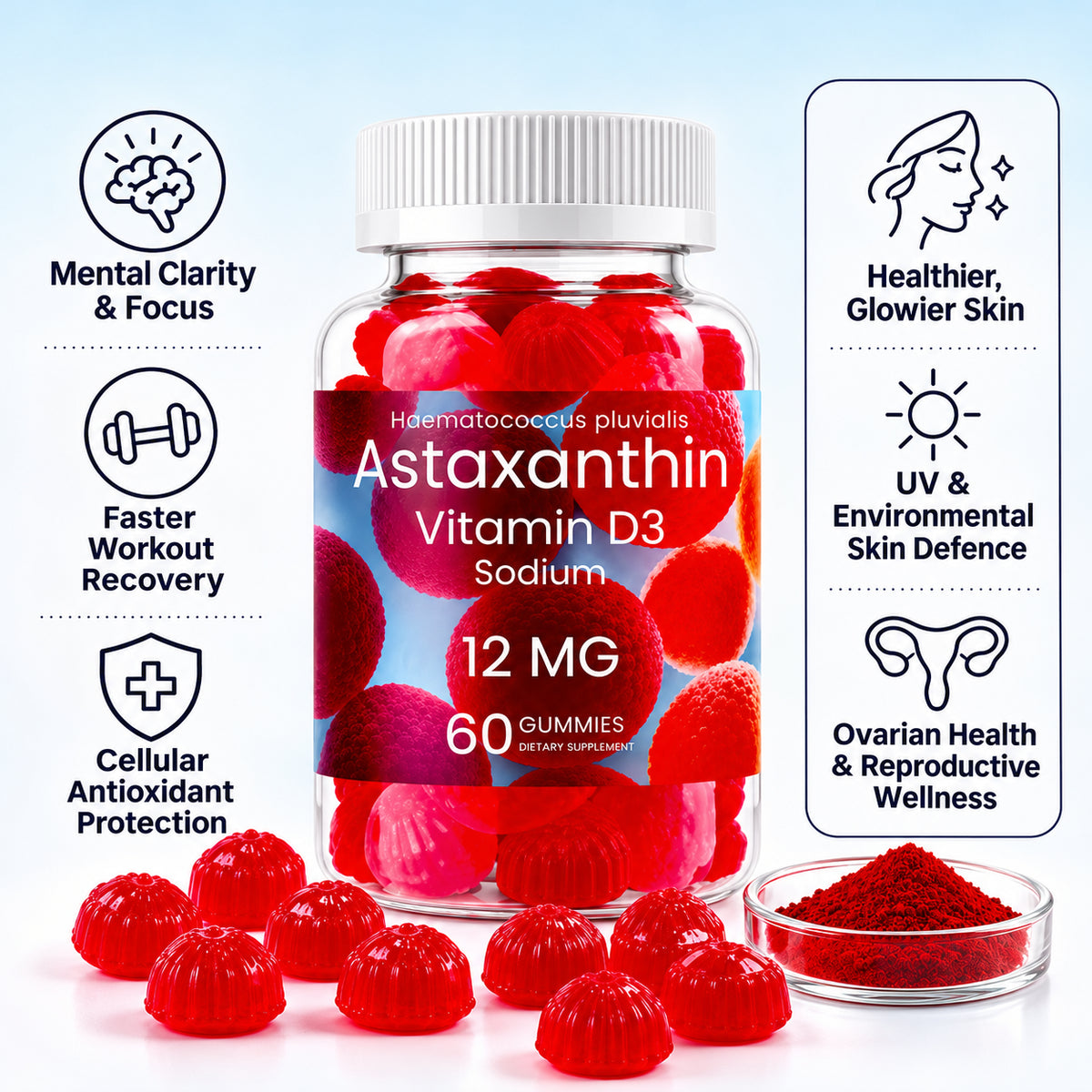
Per serving (2 gummies):
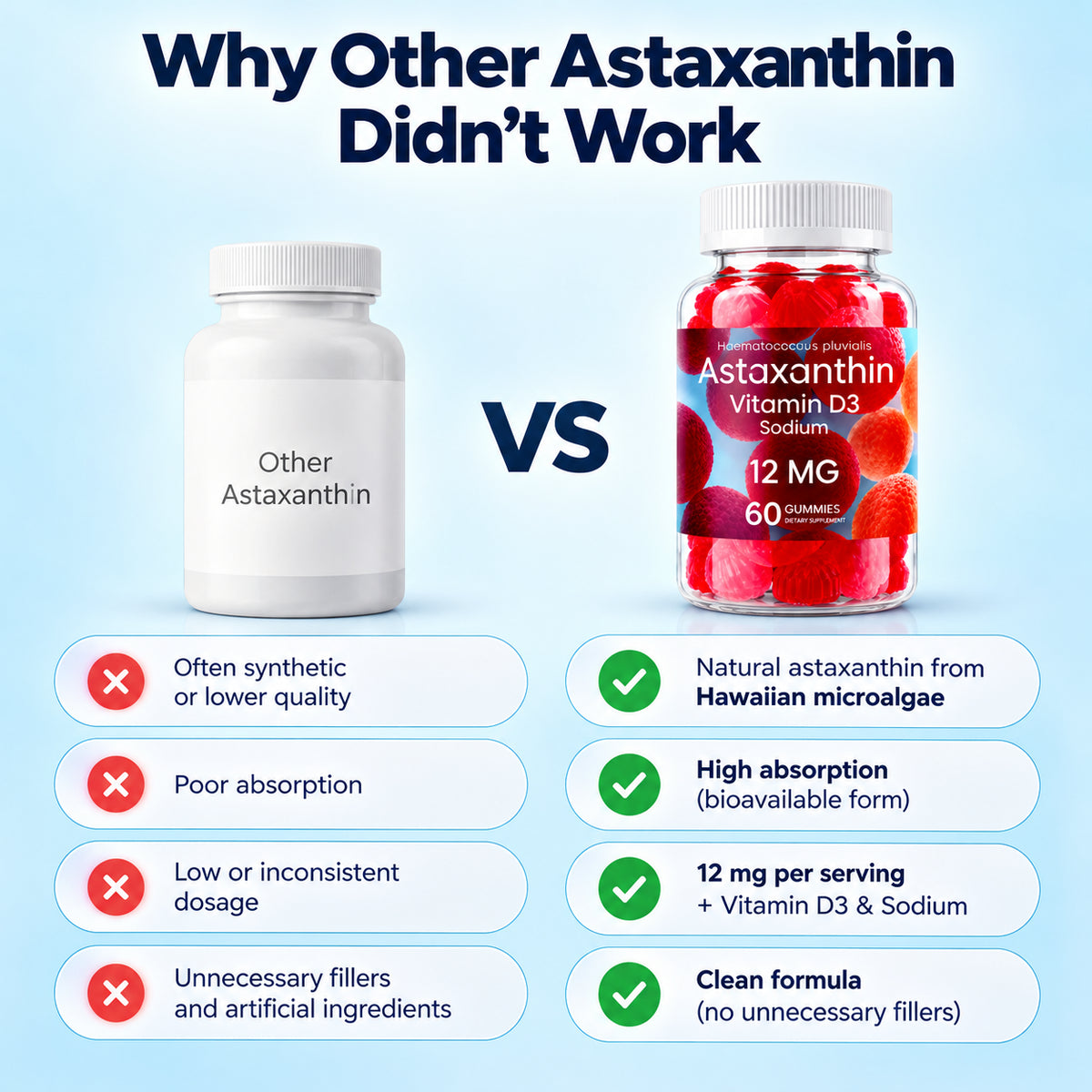
- 12 mg natural astaxanthin from Haematococcus pluvialis microalgae
- 25 mcg Vitamin D3 (1,000 IU)
- Just 5 calories per serving
- 30 servings per container
How it works
How it works
Your skin faces oxidative stress every day — from UV exposure, pollution, and other environmental factors. Astaxanthin is a naturally occurring antioxidant that helps protect cells from oxidative stress, making it an exciting ingredient for your daily skin wellness routine.
Here's how it may support your glow from within:
1. Supports a radiant-looking glow
Astaxanthin's antioxidant properties help protect cells from oxidative stress, supporting your routine for healthy-looking, radiant skin.
2. Supports skin hydration
Research has explored astaxanthin's potential role in maintaining skin moisture and elasticity, helping skin look smoother and more supple.
3. Helps support a more even-looking complexion
By helping protect against oxidative stress, astaxanthin is being studied for its potential role in skin health and the appearance of environmental skin stress.
4. Works from the inside out
Each serving delivers 12 mg of natural astaxanthin from Haematococcus pluvialis microalgae, alongside 25 mcg of Vitamin D3.
Consistency matters. Skin-related benefits have been studied over several weeks, and individual results vary. Astaxanthin is not a substitute for sunscreen or treatments for persistent redness.
A daily ritual for radiant-looking, hydrated skin. Glow starts with consistency.
How long before I see results
How long before I see results
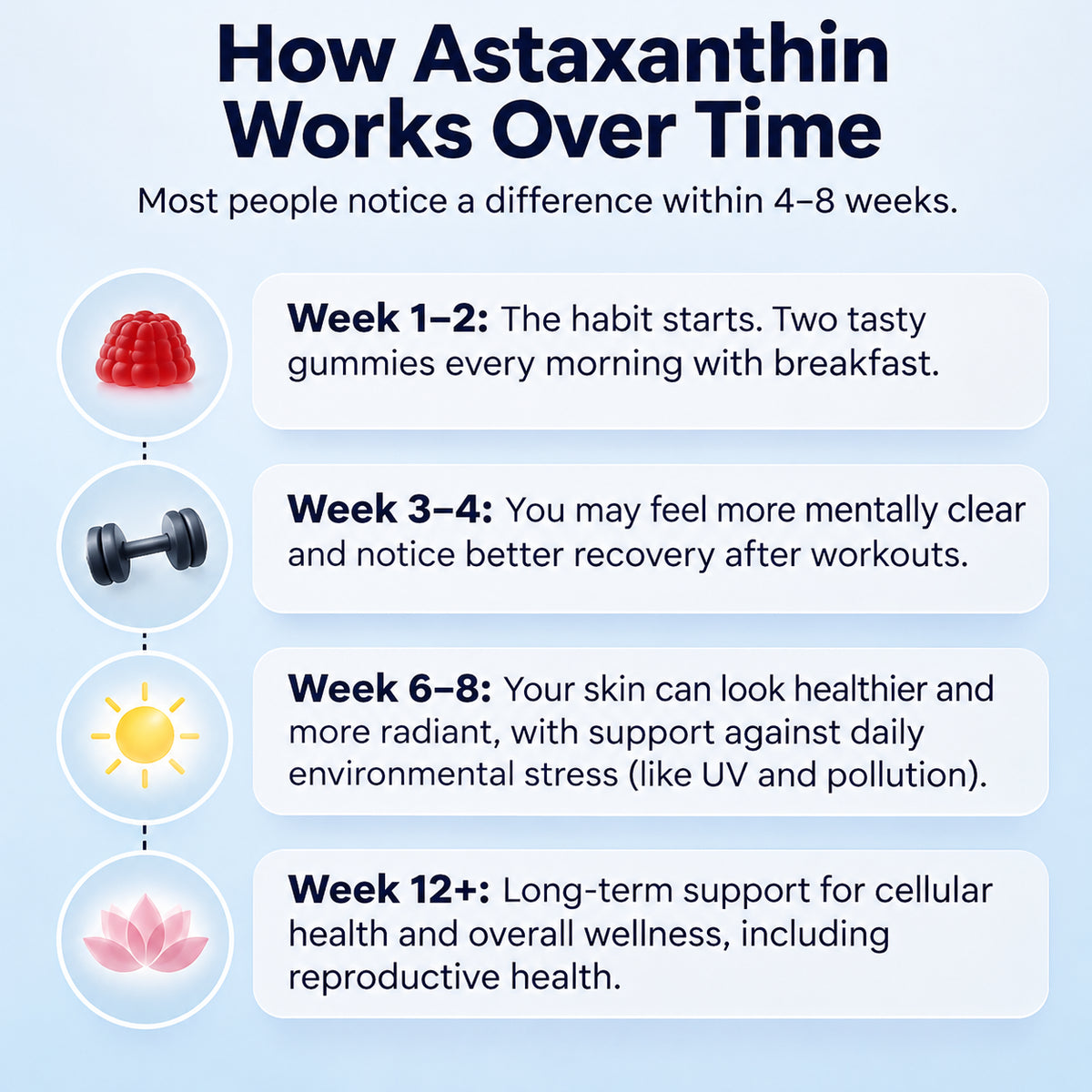
Most people notice a difference within 4–8 weeks. Astaxanthin builds up in your body day by day, so it works gradually, not overnight.
Here’s what to expect:
Week 1–2: The habit starts.
Two tasty gummies each morning with breakfast. Astaxanthin begins building up in your skin. It’s quiet work, but this is where the results start.
Week 3–4: Skin feels more comfortable.
Less tightness and dryness, and many people notice their skin is less reactive and less red. Your eyes may feel less dry after screen time, and your mind starts to feel clearer in the afternoons.
Week 6–8: The glow shows up.
A brighter, more even-looking complexion and skin that looks rested instead of tired. Your eyes feel fresher by evening, and you get through the afternoon without the usual slump.
Week 12+: The full effect.
Skin holds its moisture and bounce through changing seasons, your focus holds all day, and you bounce back faster after workouts. Many people say this is when they notice it most, especially if they skip a few days.
Astaxanthin is daily nourishment, not a quick fix. In the human skin studies, people took it every day for 6 to 16 weeks, so consistency is what makes the difference.
That’s why most customers choose the 3- or 5-month bundle: it covers the full journey from first glow to full effect, and it costs less per month.
Money Back Guarantee
Money Back Guarantee
*Less than 2% of customers claim our Money Back Guarantee.
Try it for a full skin cycle, risk-free for 60 days.
If your skin doesn’t feel more hydrated, look calmer, or have that glow, just email us. We’ll refund every penny, and you can keep the jar.
We know most astaxanthin out there is underdosed or not what the label says. Ours is lab-tested every batch, so we’d rather you try it and see for yourself than buy something you’re not sure about.
Three benefits you may notice in the first 4–8 weeks* Once your skin is fed the antioxidant it’s been missing, this is what comes back.
-

1. Skin that looks awake
You catch your reflection in the morning and your skin looks rested, even when you’re not. The dullness is gone. It’s a soft, even glow that no highlighter gives you.
-

2. Rested eyes, clearer mind
You close the laptop at 6pm and your eyes don’t burn. No 3pm fog, no rereading the same email twice. Your mind stays sharp all afternoon, and you still look awake when the day ends.
-

3. Move freely, bounce back faster
You wake up the morning after a workout and your body just moves. No stiff stretch to get out of bed, no counting days until you feel normal. You’re ready to go again, and it feels easy.


Astaxanthin Works: The Science Speaks for Itself
When 12 mg of real astaxanthin meets a simple daily routine, the results show up in clinical studies.
35%
Deeper wrinkles without it
Over 16 weeks, wrinkles in the placebo group got 35% deeper. The astaxanthin group’s skin held steady.
Tominaga et al., 2017, 65 women
8–12 WEEKS
Cognitive function research
A meta-analysis found improvement in cognitive accuracy following 8–12 weeks of astaxanthin supplementation.
Source: Liu et al., Biological Research for Nursing, 2024
7+
Human clinical trials on skin
Placebo-controlled studies link daily astaxanthin to better skin moisture, elasticity and resilience to UV.
Davinelli et al., Nutrients 2018; Ito et al., 2018
143 women
included in clinical trials
A systematic review of 4 randomized controlled trials found that astaxanthin may improve oocyte maturation rates in women undergoing assisted reproductive treatment (ART).
Source: Astaxanthin and Female Fertility –-Systematic Review & Meta-Analysi
Laurel delivers what the label actually says.
Money-back guarantee
What Happened When They Discovered Astaxanthin
REAL PEOPLE. REAL ROUTINES.
Because feeling good in your skin starts with the little things.

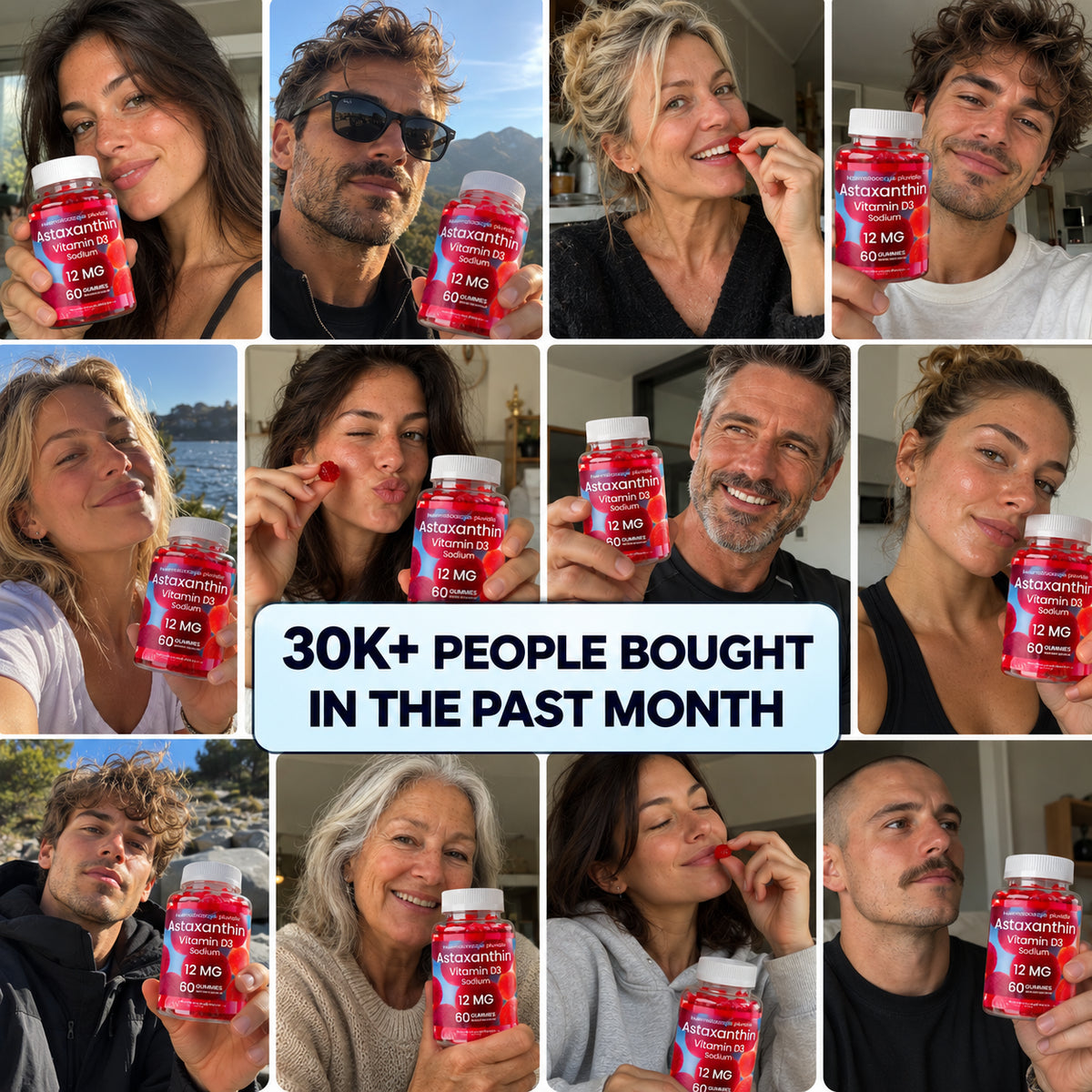
Since turning 40, my skin has looked tired no matter how much I slept. It was dull and grey, especially in winter. I’ve spent a small fortune on vitamin C serums, retinol, and a collagen powder I forced down every morning for three months. Nothing really changed. I started astaxanthin without much hope. Around week six, I caught myself in the bathroom mirror and thought, huh, I look rested. My sister asked if I’d had a facial. I hadn’t.

I’m 34 and starting to think more seriously about my reproductive health. I wanted to be proactive rather than wait until I started trying to conceive. I came across astaxanthin and its research around ovarian health, egg quality and oxidative stress. After learning more about its antioxidant properties, I decided to add it to my daily routine. I love that it's an easy, enjoyable gummy rather than another handful of supplements. It feels good to be taking a more intentional approach to my reproductive wellness.

My dermatologist kept telling me to wear SPF year-round, and I finally listened, but my skin still looked dull and dry by February. Between radiators at home and cold wind outside, it felt like nothing kept up. I added astaxanthin to my morning routine next to my SPF moisturizer. A couple of months in, my skin looks more even and less washed-out, even in the darkest weeks. It feels like the missing piece of the routine I was already doing.

I originally started looking into astaxanthin because I wanted to take better care of my skin during summer, especially with more time spent outdoors. I’m 36 and train 4–5 times a week, but I was also struggling with brain fog, afternoon fatigue and feeling drained after intense workouts. After learning more about astaxanthin’s antioxidant properties and its potential benefits for skin, cognitive health and recovery, I decided to give it a try. Since adding it to my daily routine, I feel more switched on throughout the day, my skin looks healthier, and my post-workout recovery seems easier to manage. I love that it's such a simple addition to my routine.
Since turning 40, my skin has looked tired no matter how much I slept. It was dull and grey, especially in winter. I’ve spent a small fortune on vitamin C serums, retinol, and a collagen powder I forced down every morning for three months. Nothing really changed. I started astaxanthin without much hope. Around week six, I caught myself in the bathroom mirror and thought, huh, I look rested. My sister asked if I’d had a facial. I hadn’t.
I’m 34 and starting to think more seriously about my reproductive health. I wanted to be proactive rather than wait until I started trying to conceive. I came across astaxanthin and its research around ovarian health, egg quality and oxidative stress. After learning more about its antioxidant properties, I decided to add it to my daily routine. I love that it's an easy, enjoyable gummy rather than another handful of supplements. It feels good to be taking a more intentional approach to my reproductive wellness.
My dermatologist kept telling me to wear SPF year-round, and I finally listened, but my skin still looked dull and dry by February. Between radiators at home and cold wind outside, it felt like nothing kept up. I added astaxanthin to my morning routine next to my SPF moisturizer. A couple of months in, my skin looks more even and less washed-out, even in the darkest weeks. It feels like the missing piece of the routine I was already doing.
I originally started looking into astaxanthin because I wanted to take better care of my skin during summer, especially with more time spent outdoors. I’m 36 and train 4–5 times a week, but I was also struggling with brain fog, afternoon fatigue and feeling drained after intense workouts. After learning more about astaxanthin’s antioxidant properties and its potential benefits for skin, cognitive health and recovery, I decided to give it a try. Since adding it to my daily routine, I feel more switched on throughout the day, my skin looks healthier, and my post-workout recovery seems easier to manage. I love that it's such a simple addition to my routine.
Did you know your daily glow gummy works far beyond your skin? Here’s what else you’ll notice.
-

Fresher Eyes
Long days on screens leave eyes dry and tired. Many people notice their eyes feel more comfortable by evening.*
-

Less Tired, More You
Busy days take less out of you. Many people say they feel less worn out and more like themselves after workouts and long, active days.*
-

Sharper Focus
Stay focused through long workdays. Many people say their mind feels clearer and less foggy in the afternoon.*


One Antioxidant. Multiple Benefits.
Support your glow from within! Discover how astaxanthin helps support healthy-looking skin, eye health, brain function, heart health and everyday recovery - all in one powerful daily supplement.